High-precision valve components play an indispensable role in guaranteeing the secure operation of power grids, chemical facilities, and offshore oilfields, where components frequently withstand extreme operating pressure. Tiny surface imperfections on valve stems, choke seats or flapper seals may trigger severe fluid leakage, resulting in environmental sanctions and expensive production shutdowns. Although purchasing these components from China brings prominent cost benefits, rigorous verification is necessary to find suppliers that can stably satisfy strict geometrical and metallurgical specifications.
Against the backdrop of modern global supply chains, enterprises are looking for reliable precision manufacturing partners rather than simple machining service providers. Top-tier manufacturers continuously deploy substantial resources into sophisticated 5-axis CNC equipment, automated inspection platforms, and complete material traceability covering the whole process from raw ingots to finished goods. Accordingly, when choosing a stable long-term manufacturing collaborator, procurement teams ought to evaluate not merely technical competence, but also standardized process management and comprehensive quality assurance systems.
Defining High-Precision Valve Components
For industrial fluid control systems, ultra-precise manufacturing tolerances are a non-compromising manufacturing standard. The high-pressure valve assembly is designed to withstand the harshest working environment, as it can withstand a cyclic pressure load of more than 15,000 PSI (103 MPa), and it can handle temperatures from -50°C to 350°C. Extreme temperature fluctuations. In order to manufacture valve body parts suitable for these conditions, the manufacturer must maintain extremely high dimensional accuracy, usually allowing the deviation to be controlled within ±0.005 mm.
The entire series of core valve body parts must meet this strict production standard, including valve stem, valve core, valve plate, and customized pressure housing. Sealing performance of finished valve assemblies hinges entirely on three critical machining indicators: uniform surface roughness, precise thread pitch dimensions, and precise concentricity control across all parts. For this reason, purchasing specialists should prioritize manufacturing partners with rich hands-on experience in oilfield fluid control technology and specialized severe-service precision machining capabilities.
Raw Material Sourcing and Metallurgy Control
Certified raw material quality lays the foundation for outstanding valve operational performance. Low-grade steel billets and unvalidated alloy forgings are prone to developing internal cavities and stress cracks when subjected to heavy mechanical loads. Trustworthy Chinese valve manufacturers implement rigid incoming material inspection standards and only source raw metal blanks from certified top-tier steel suppliers.
Complete metallurgical traceability should be a non-negotiable requirement for your procurement. Confirm that your manufacturing partner can supply EN 10204 3.1 Mill Test Reports (MTRs) corresponding to each material heat lot prior to any machining or cutting work. These official documents fully validate key material properties including chemical makeup, tensile strength, yield strength, and impact toughness.
For sour gas applications, confirm that raw materials comply with NACE MR0175 / ISO 15156 standards. This step prevents sulfide stress cracking during field deployment.
Multi-Axis CNC Machining Capabilities
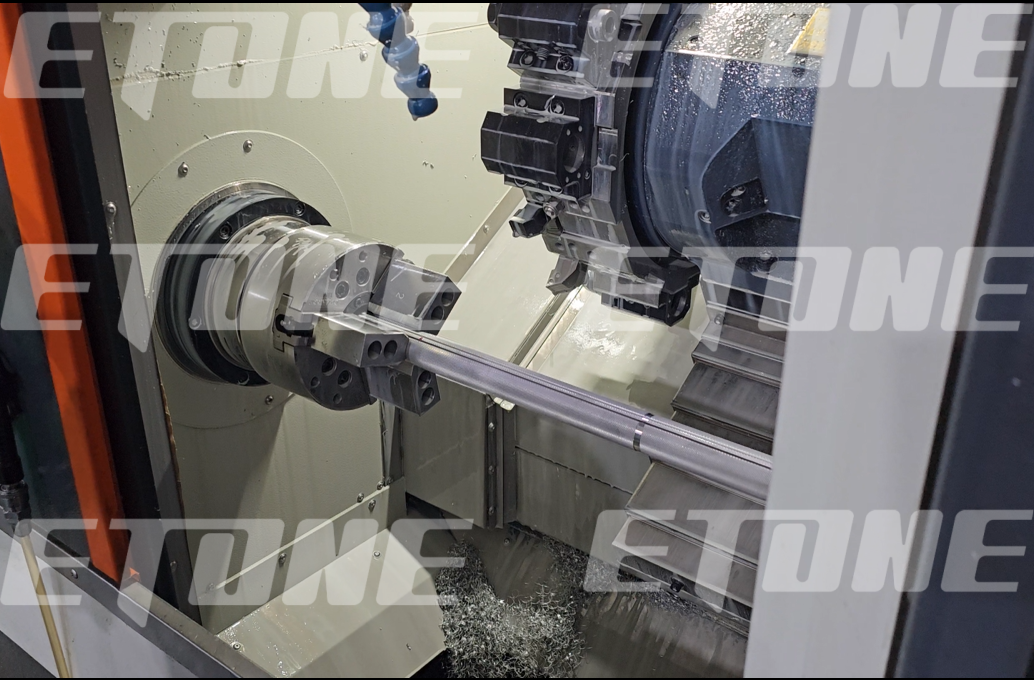
Leading Chinese precision machining factories are equipped with multi-axis machining centers, which finish all complicated geometric features in one clamping operation. This processing method removes inaccuracies brought by repeated manual repositioning and cuts down overall production turnaround time.
Three core CNC machine tools cater to different valve component manufacturing demands:
Swiss-Type Precision CNC Turning
Perfect for slender small-diameter valve stems, needle pins and mass-produced fittings, this equipment guarantees concentricity within ±0.003 mm.
5-Axis CNC Milling Centers
These machines are essential for manufacturing elaborate valve housings, inclined flow passages and abnormally shaped flappers, removing the need for repeated fixture changes.
Turn-Mill Multitasking Centers
They combine turning, cross drilling and thread cutting within one working cycle, allowing one-step forming of plug valve bodies and valve seats.
Surface Finishing and Sealing Tolerances
You should confirm your supplier has independent dedicated lapping and micro-grinding production lines, which can deliver ultra-smooth surface finishes ranging from Ra 0.2 μm to an ultra-fine Ra 0.05 μm. Besides precision surface polishing, professional surface coating treatments can further strengthen the parts’ anti-wear and anti-erosion properties:
QPQ Liquid Nitriding
This treatment boosts workpiece surface hardness to 65–70 HRC, effectively preventing galling friction on movable plug valve inserts.
Electroless Nickel Plating (ENP)
It forms consistent anti-corrosion protective layers even on hard-to-reach intricate inner holes and dynamic sealing grooves.
HVOF Carbide Cladding
High-density tungsten carbide coatings can be fused onto valve gates and seats via this process, ideal for components that work under abrasive fracturing slurry conditions.
Quality Management and Process Traceability
Certifications validate a factory’s commitment to quality. A reliable valve components manufacturer maintains audited Quality Management Systems (QMS) tailored to precision manufacturing.
ISO 9001:2015: This standard establishes standardized basic quality management systems, complete operational document control rules, and systematic continuous improvement mechanisms.
IATF 16949:2016: The standard is a certificate for the sale of automobile accessories, which strictly stipulates the standardization of advanced product quality planning and failure mode and effects analysis workflow.
API Q1 & API 6A: These specifications confirm manufacturers satisfy stringent manufacturing requirements for oilfield equipment, a mandatory credential for high-pressure fluid control valve components.
Every order must maintain full batch traceability. Heat numbers, CNC operator logs, inspection sheets, and plating certificates should link directly to the finished batch number.
In-House Inspection and Metrology Capabilities
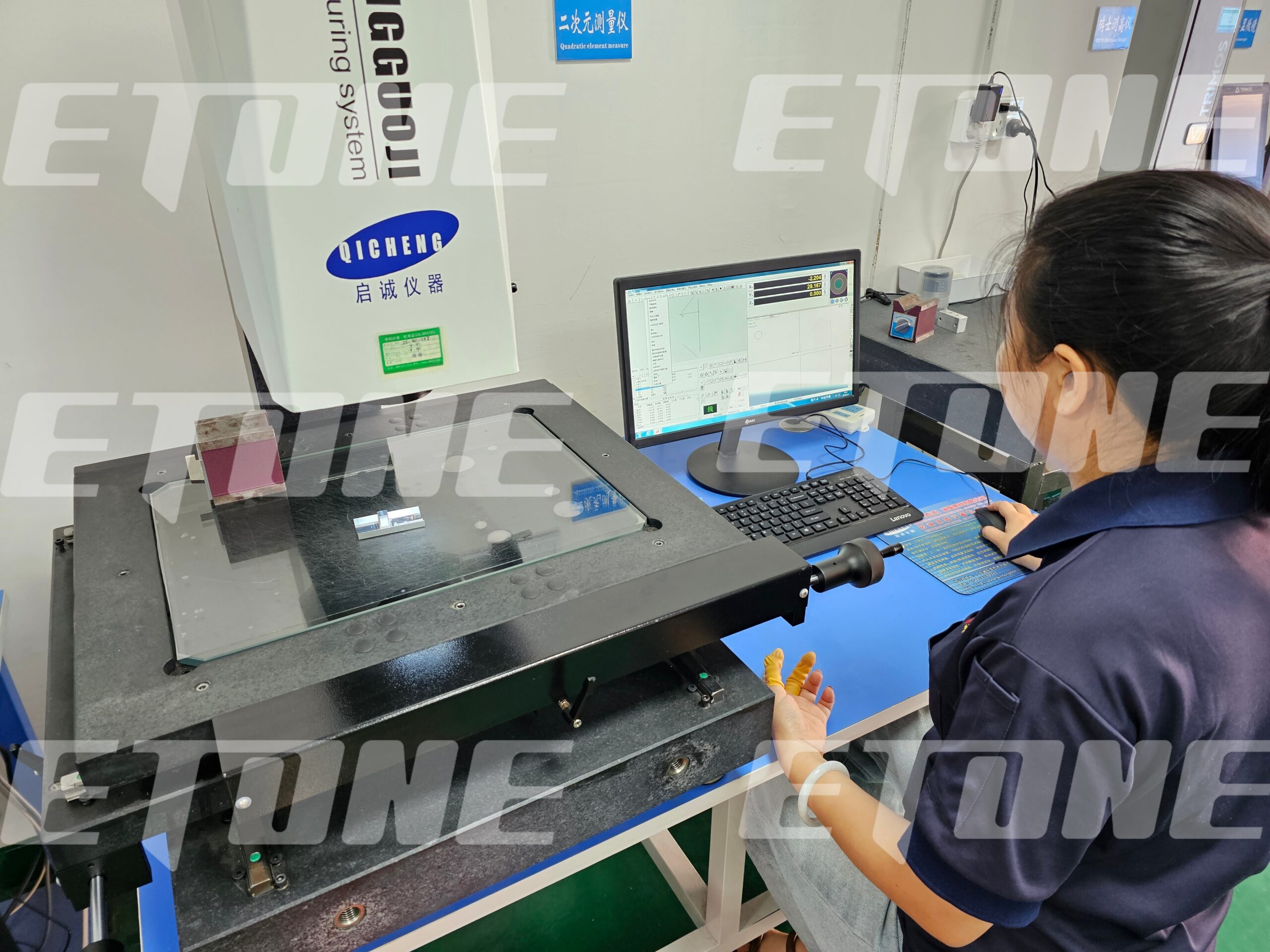
Never rely on a factory that outsources critical quality verification. Elite Chinese suppliers invest heavily in climate-controlled metrology labs equipped with high-precision measurement tools.
| Inspection Category | Equipment / Method | Primary Inspection Purpose |
| 3D Geometric Inspection | Coordinate Measuring Machine (CMM) | Validates spatial positions, hole centers, and complex profile tolerances. |
| Surface & Thread Profiling | Optical Comparators & Profilometers | Measures surface roughness ($Ra/Rz$) and precise thread angle profiles. |
| Non-Destructive Testing | MPI (Magnetic Particle) & UT (Ultrasonic) | Detects subsurface micro-cracks, inclusions, and forging defects. |
| Pressure Integrity Testing | Hydrostatic & Pneumatic Test Rigs | Verifies valve repair kits and body assemblies under working pressure conditions. |
Custom Engineering and Reverse Engineering
Top valve parts manufacturers offer engineering support beyond standard contract machining. They evaluate part geometry using Design for Manufacturability (DFM) analyses to cut unit costs while boosting component durability.
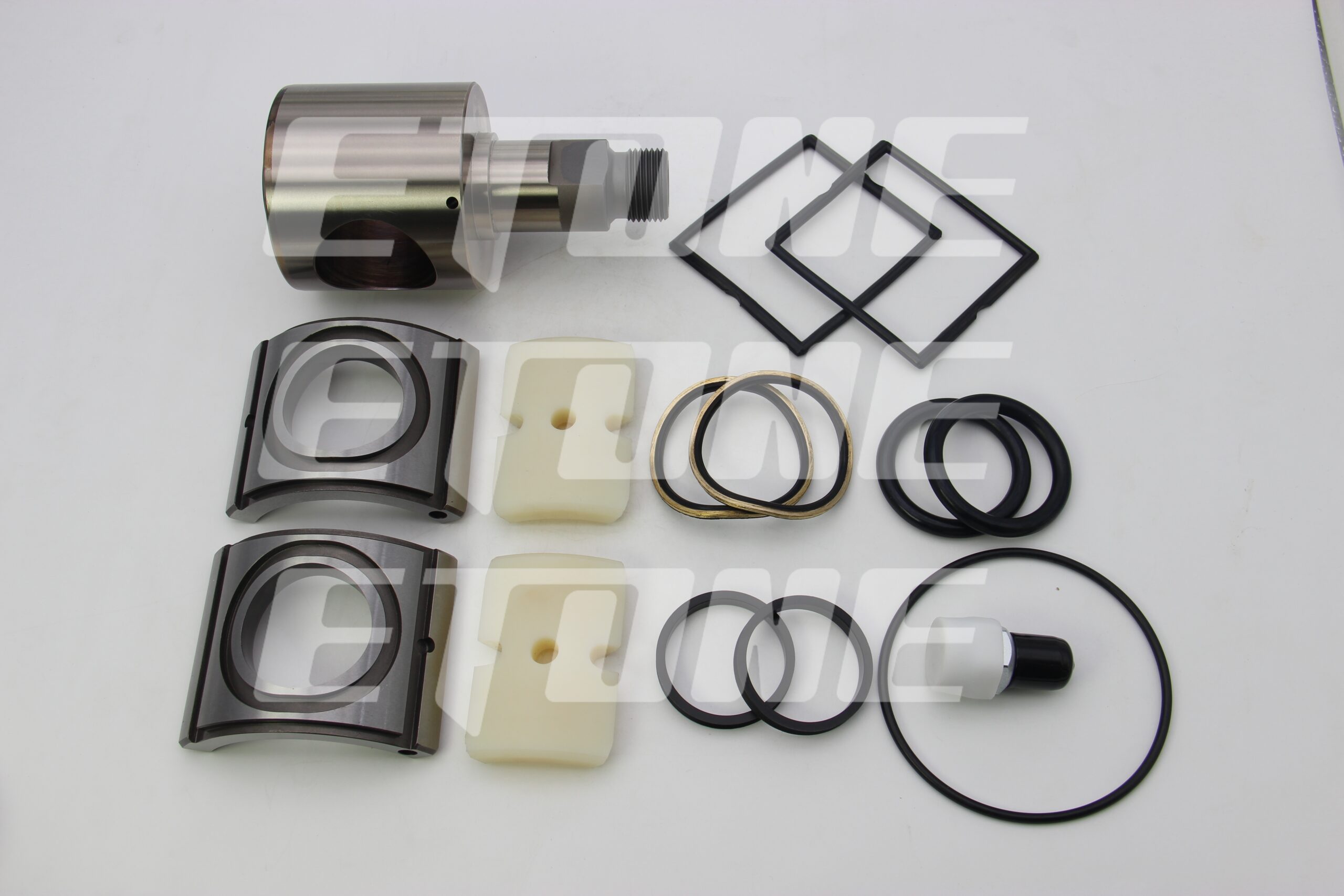
Furthermore, aftermarket flow control operations often need replacement components for legacy valve models. A capable supplier uses 3D laser scanning and coordinate measurement to reverse-engineer worn parts, producing replacement kits compatible with major international OEM valve brands (such as FMC, SPM, Forum, and Cameron).
Production Capacity and Supply Chain Stability
A reliable supplier will keep safety stock of mainstream alloy materials including AISI 4140, 17-4PH, and 316 stainless steel. Sufficient raw material inventory enables the factory to launch rush production for urgent offshore maintenance projects, instead of enduring weeks of waiting for material replenishment.
Export Packaging & Logistics Control
Precision ground threads and ultra-fine lapped surfaces are prone to collision damage and corrosion during long sea transportation. Premium export packaging safeguards precision valve components throughout lengthy ocean shipments.
Volatile Corrosion Inhibitor (VCI) Protection: All parts shall be coated with anti-rust oil and sealed inside airtight VCI bags to isolate saltwater and avoid corrosion.
Custom Foam Inserts and Reinforced Plastic Thread Caps for Component Protection: Delicate valve stems and spare assembly components require custom foam holders and robust thread protective caps to deliver comprehensive safeguarding.
ISPM-15 Fumigated Wooden Crates: Reinforced fumigated wooden boxes that comply with ISPM-15 standards are mandatory for transporting heavy steel forgings to avoid transit damage.
Total Cost of Quality Rather Than Upfront Unit Cost
If you choose a manufacturer only in pursuit of the lowest single price as a standard, you will inevitably incur additional costs. Small processing errors, insufficient heat treatment, and porous coating defects may cause the valve to fail during operation on site, resulting in huge economic losses due to production stagnation.
You should prioritize the evaluation of “total cost of quality” (TCOQ), and not only pay attention to the initial price. By cooperating with manufacturers who provide certified raw materials, carrying out comprehensive coordinate measuring machine (CMM) testing for each part, and using standardized export packaging, you can avoid high-cost product returns and maintain your brand reputation.
Stepwise Vendor Inspection Standards
Adopt this practical inspection checklist when auditing potential Chinese manufacturing collaborators: Check raw material supply chains: Examine raw material storage zones and ensure Mill Test Reports correspond exactly to the heat numbers of incoming metal blanks. Inspect machine maintenance records: Confirm all CNC equipment receives regular laser calibration and scheduled preventive maintenance. Audit full quality documentation: Check valid calibration labels on CMM probes, micrometer kits, and pressure measuring gauges. Verify full-process traceability: Randomly pick finished goods from the shipping area and trace their complete production records back to the original steel billets and operator operation logs.
Why Etone Technology Sets the Manufacturing Benchmark
As a certified manufacturer holding ISO 9001:2015 and IATF 16949:2016 accreditations, Etone Technology specializes in high-precision CNC machining for oilfield fluid control equipment. Our robust valve components are professionally engineered to deliver stable performance amid extreme pressure and severe working conditions.
Broad Machining Capabilities for Diverse Materials
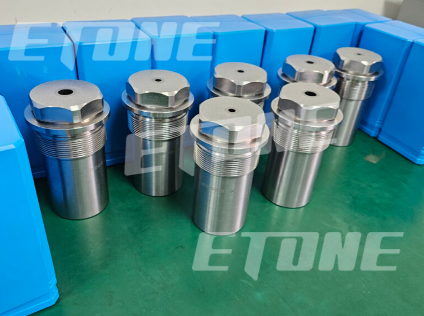
Our team boasts extensive processing experience with a wide range of materials, including 4140, 4340, 17-4PH stainless steel, SUS316, Inconel 718, and solid tungsten carbide.
Custom Precision Valve Product Line
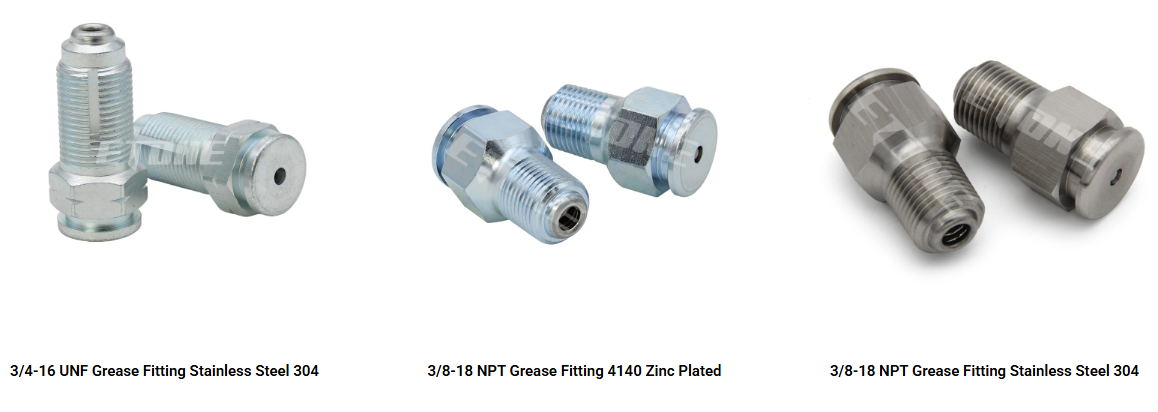
We supply bespoke fluid control parts covering choke beans, plug valve maintenance kits, check valve flappers, valve stems and grease fittings.
Complete In-House Quality Inspection & Material Traceability
All products undergo full internal metrology testing, including 3D CMM measurement, optical contour detection and non-destructive crack inspection. We also provide full EN 10204 3.1 certification to guarantee full traceability of raw materials.
One-Stop DFM Optimization & Fast Prototyping Solutions
Our professional engineering team delivers full turnkey services, such as structural DFM improvement, custom fixture design, and fast prototype production with shortened lead times.
FAQ
Q1: How does Etone Technology guarantee raw material authenticity for critical valve parts?
We only procure alloy bars and forgings from fully audited top-tier steel manufacturers. Each batch of incoming raw materials will be tested for chemical composition and mechanical properties. Complete EN 10204 3.1 Mill Test Reports (MTRs) are attached to every shipment, enabling full traceability of all raw materials.
Q2: What are the maximum tolerances for valve components?
Our equipment is capable of achieving dimensional tolerances as tight as ±0.005 millimeters. The specialized grinding process we use achieves a surface roughness of Ra 0.2 on the sealing surfaces.
Q3: Can you manufacture custom valve parts compatible with standard OEM brands?
Yes. We manufacture replacement components and repair kits compatible with leading international valve designs (such as FMC, SPM, Forum, and Cameron). Our engineering team can also reverse-engineer sample parts to create precise 3D CAD models for production.
Q4: How do you prevent surface corrosion during ocean transit?
All machined steel parts undergo automated cleaning, rust-inhibiting oil treatment, individual VCI bubble wrapping, and plastic thread capping. Finished goods are secured in custom foam compartments inside ISPM-15 compliant wooden boxes.
Q5: What certifications does Etone Technology hold for valve parts manufacturing?
Etone Technology maintains active ISO 9001:2015 and IATF 16949:2016 certifications. Our quality processes align strictly with API Q1 standards for oilfield flow control equipment.
Partner with Etone Technology for Precision Valve Components
Ready to Upgrade Your Valve Parts Supply Chain?
Send us your engineering drawings, material specifications, and project volumes today. Our engineering team will deliver a comprehensive DFM evaluation and competitive quotation within 24 hours.