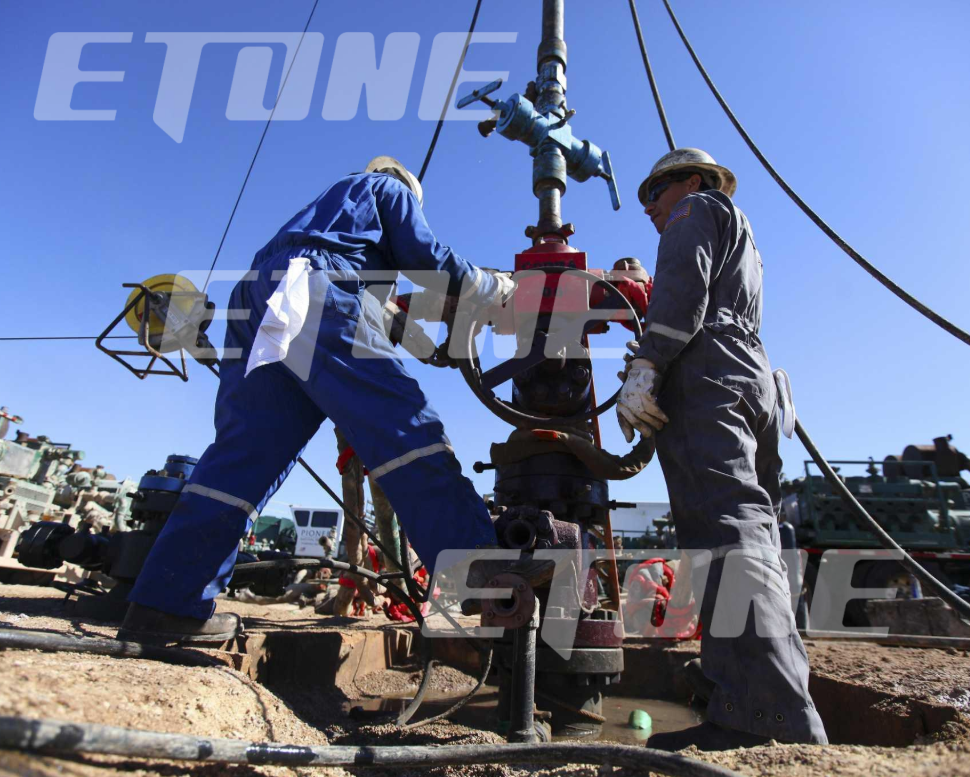
Within today’s oil and gas industry, reliable operational performance is an absolute requirement. Surface‑mounted and subsea hardware faces harsh service environments, whether deployed on high‑pressure hydraulic fracturing manifolds, directional‑drilling assemblies, or offshore production Christmas-tree units. Flow‑control parts regularly endure operating pressures ranging from 15,000 PSI up to 20,000 PSI, highly abrasive proppant‑laden slurries, extreme temperature swings, plus corrosive substances including hydrogen sulfide and carbon‑dioxide gas.
Under such demanding service conditions, even a minor flaw in one single component — for instance, thread tapers that deviate from specification, micro‑cracks brought on by incorrect heat‑treatment cycles, or seal grooves falling outside permitted dimensional tolerances — may lead to destructive wash‑out failures, unplanned Non‑Productive Time (NPT), expensive environmental cleanup work, and serious safety threats to on‑site staff.
To reduce these operational hazards, worldwide exploration and production (E&P) operators, field‑service contractors, and purchasing teams enforce rigorous quality‑control (QC) standards on every custom‑made CNC‑machined spare component.
This document lays out a full‑scope quality‑control checklist dedicated to custom‑produced CNC‑machined oil‑and‑gas components. It encompasses raw‑material verification, dimensional inspection via metrology equipment, non‑destructive testing (NDT) procedures, surface‑finish criteria, and compliance validation for pressure‑related performance. Implementing these quality‑control benchmarks enables on‑site operating teams to lower repeated maintenance expenses while protecting their high‑pressure flow‑management hardware.
1. The Vital Impact of Quality Control on Oilfield Equipment Dependability
Quality‑control practices in the energy sector are about much more than routine dimensional inspections. When equipment operates under high‑pressure, high‑temperature (HPHT) service conditions, the lifespan and operational safety of equipment are directly governed by component quality.
One small imperfection in a wearable part can start a gradual‑failure chain reaction throughout the entire pressure‑containment manifold.
Galling and Structural Seizing: Inferior surface finishes on internal moving parts may remove protective lubrication layers. This phenomenon gives rise to micro‑welding, increased operating torque, and final fracture of drive stems.
Sulfide Stress Cracking (SSC): Steel components with non‑conforming hardness deployed within sour‑gas environments will quickly suffer hydrogen embrittlement, which ends in unexpected, devastating brittle failure.
Elastomer Extrusion: Out‑of‑tolerance backup‑ring measurements or improperly machined seal grooves may shear high‑pressure elastomer seal rings when subjected to recurring pressure cycles.
By implementing a stringent quality‑control management framework, purchasing departments can guarantee that all Plug Valve Repair Kit, Flapper Check Valve Repair Kit, Choke Valve Parts, Relief Valve Repair Kit and Plunger Pump Packing sets offer trouble‑free drop‑in replacement performance and consistent long‑run reliability.
2. Phase 1: Raw Material Inspection & Chemical Traceability
Quality control starts long before CNC spindles begin turning. Raw material integrity forms the foundation of every high-pressure oilfield component.
Mill Test Report (MTR) Verification
Every bar stock, forging, or casting must be traceable to a certified Mill Test Report.
Action: Cross-reference physical heat numbers stamped on raw steel bars with MTR documentation.
Standard: Ensure compliance with API Spec 6A and ASTM standards.
Positive Material Identification (PMI) Testing
Paper‑based certification cannot serve as the sole proof of material compliance. Physical alloy verification is required to eliminate the risk of material mix‑ups during manufacturing.
Implementation Measure: Carry out non‑destructive PMI inspection on every batch of incoming raw stock with X‑ray Fluorescence (XRF) or Optical Emission Spectrometry (OES) analyzers.
Target Alloy Grades:
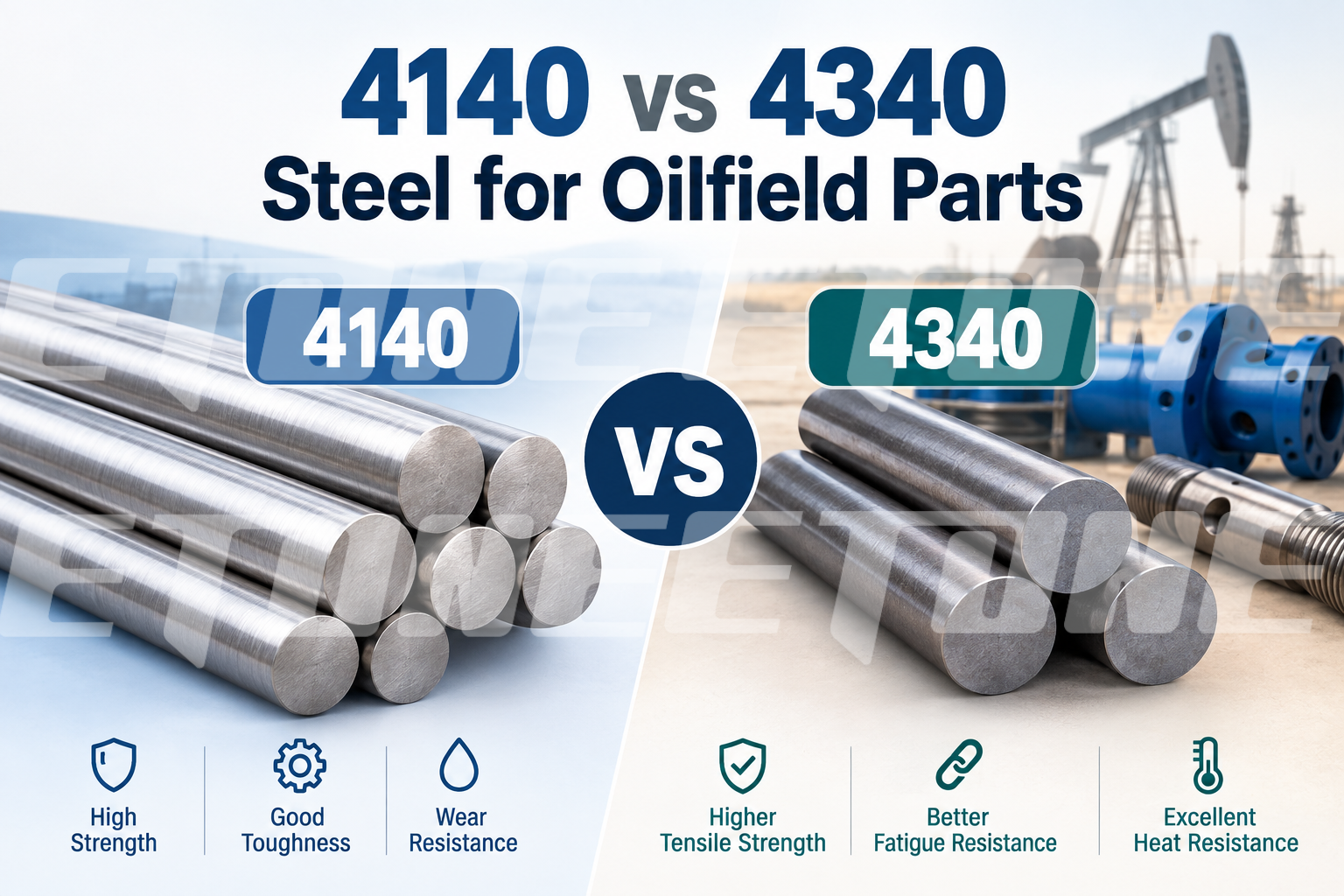
AISI 4140 / 4130 Alloy Steel: High‑tensile‑strength steel suited for conventional high‑pressure flow‑line hardware.
17‑4PH Stainless Steel: A precipitation‑hardened alloy that delivers outstanding mechanical strength together with corrosion‑resistant properties.
Tungsten Carbide: Extremely hard composite inserts applied for high‑speed choke beans and valve‑seat components.
3. Phase 2: In-Process CNC Machining & Dimensional Verification
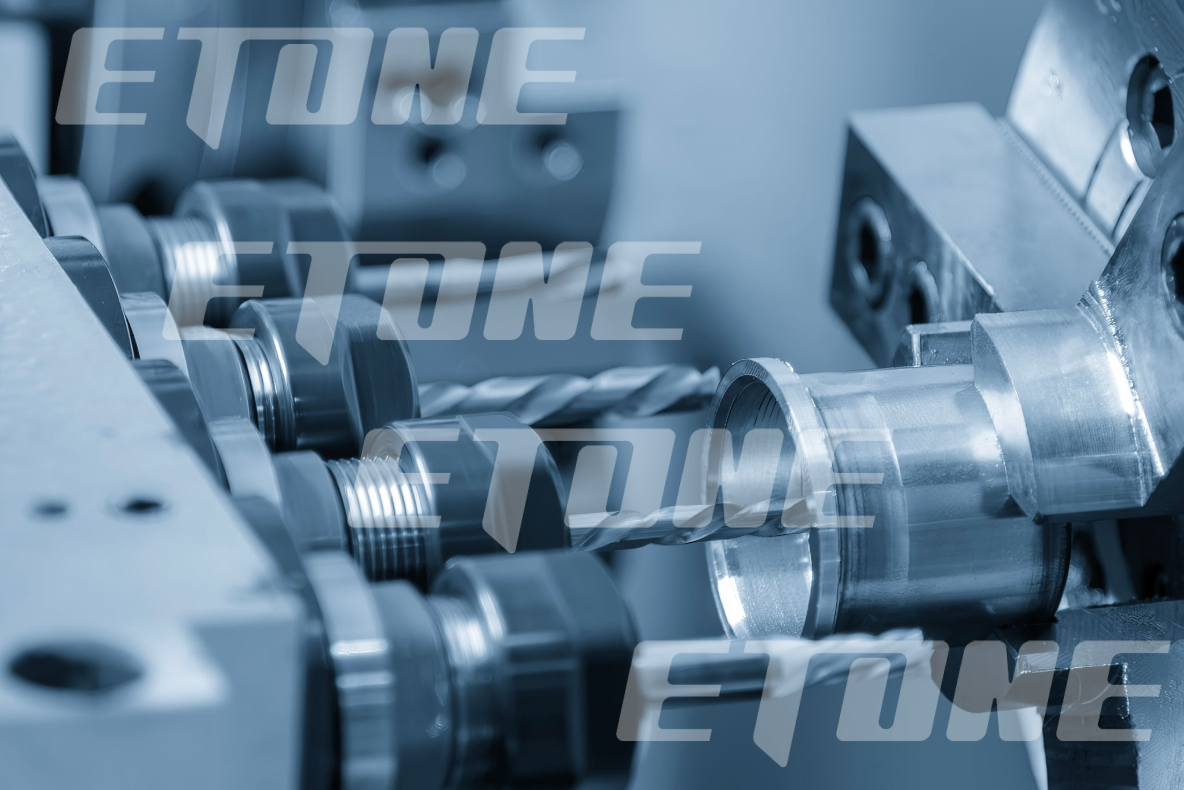
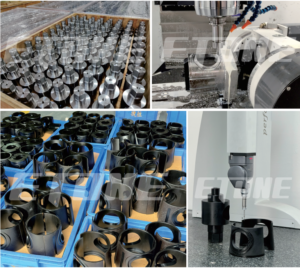
Close dimensional monitoring throughout multi‑axis turning, milling, and grinding processes enables custom replacement parts to achieve full compliance with target geometric specifications.
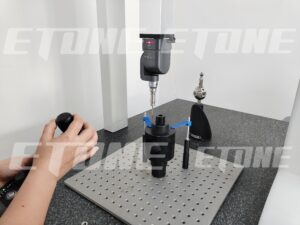
Coordinate Measuring Machine (CMM) Inspection
Complex geometries—such as the curved sealing faces of plug valve side segments, choke valve stem profiles, or relief valve disc seats—require multi-axis automated inspection.
Action: Utilize high-precision 3D CMMs programmatically calibrated to CAD models to verify dimensional tolerances down to ±0.005 mm.
Micro-Level Tolerance Compliance
To prevent high-velocity proppant erosion, replacement components must achieve tight tolerances across all sealing surfaces:
Plug Valve Side Segments & Plugs: Tight concentricity and roundness tolerances must be upheld to achieve consistent metal‑to‑metal sealing contact.
Choke Valve Stems & Beans: Orifice diameters shall be held to precise specifications, enabling accurate flow control and stable, forecastable pressure‑drop performance.
API Thread Precision and Gauge Calibration
Threaded connections on flow control equipment operate under extreme tensile loads and cyclic pressure variations.
Action: Inspect thread pitch, taper, lead, and angle using calibrated API thread gauges, working plug/ring gauges, and optical comparators.
Standards: Verify compliance with API Spec 7-1 for rotary shoulder connections and API Spec 5B for line pipe threads.
4. Phase 3: Heat‑Treatment Verification and Metallurgical Inspection
Heat‑treatment procedures define critical mechanical characteristics including hardness, yield strength, and impact toughness. Parts subjected to inaccurate heat‑treatment cycles are prone to premature failure once exposed to operational field‑loading stress.
Hardness Profile Testing (HRC / HBW)
Appropriate hardness values strike a balance between wear‑resistant performance and material ductility.
Action: Test Rockwell C (HRC) or Brinell (HBW) hardness at several surface sampling points on each batch of heat‑treated workpieces.
5. Phase 4: Surface‑Finish and Coating‑Integrity Examination
The surface quality of parts has a direct bearing on seal service life, operating torque and hydrodynamic performance of high‑pressure oilfield valves.
Surface Roughness Profilometry
Rough machined surfaces will speed‑up elastomer abrasion, wash away valve lubricant grease and raise rotational torque.
Action: Take surface‑roughness readings on all dynamic‑sealing zones with properly calibrated profilometer equipment.
Surface Plating and Protective Treatments
Metal components are frequently finished with protective coatings to guard against corrosion during warehouse storage and on‑site operation:
Electroless Nickel Plating (ENP): Delivers anti‑corrosion performance and surface lubricity. Check plating thickness by means of magnetic or eddy‑current thickness testers.
Phosphate Conversion Coating: Used on carbon‑steel valve parts to enhance grease‑holding capacity and rust protection.
Thermal Spray / HVOF Coatings: High‑Velocity Oxygen Fuel (HVOF) chromium‑carbide or tungsten‑carbide overlay coatings are deposited onto high‑wear valve stems and seats. Coating bond strength shall be inspected in compliance with ASTM C633 specifications.
6. Phase 5: Pressure‑Testing, Assembly Validation and Packaging Inspection
Hydrostatic pressure testing, assembly check‑up and protective packaging form the final quality‑assurance checkpoint before parts leave production.
Quality Control for Elastomers and Seal Rings
The reliable performance of high‑end Plug Valve Repair Kits and Plunger Pump Packing sets largely depends on intact elastomer components:
Durometer Hardness: Check Shore A or Shore D hardness values with calibrated durometer instruments.
Explosive Decompression Resistance: Confirm that elastomer materials hold certification to ISO 23936‑2 (NORSOK M‑710) for resistance against rapid gas decompression (RGD).
Hydrostatic and Gas Pressure Testing
All fully‑assembled valves and replacement sub‑components are required to complete pressure testing at or above their rated field working pressure.
Low‑Pressure Seat Test: Introduce air or water pressure of 250 PSI to confirm proper initial sealing contact.
High‑Pressure Shell & Seat Test: Maintain pressure at 1.5 times the maximum working pressure for no less than 15 minutes, in compliance with API 6A requirements.
Acceptance Criteria: No pressure loss, no observable leakage, and zero structural deformation of the component body.
7. Comprehensive Oilfield Spare Parts Portfolio from Etone Oil
At Etone Oil (www.etoneoil.com), our quality control system governs every replacement part across our entire flow-control product line:
Plug Valve Repair Kit: Complete rebuild kits including match-ground side segments, precision plugs, inner/outer seal rings, and high-pressure grease injectors for 1502/1002 valve bodies.
Flapper Check Valve Repair Kit: Heavy-duty repair sets with CNC-milled flapper plates, hardened hinge pins, torsion springs, and elastomeric seats engineered for instant backflow isolation.
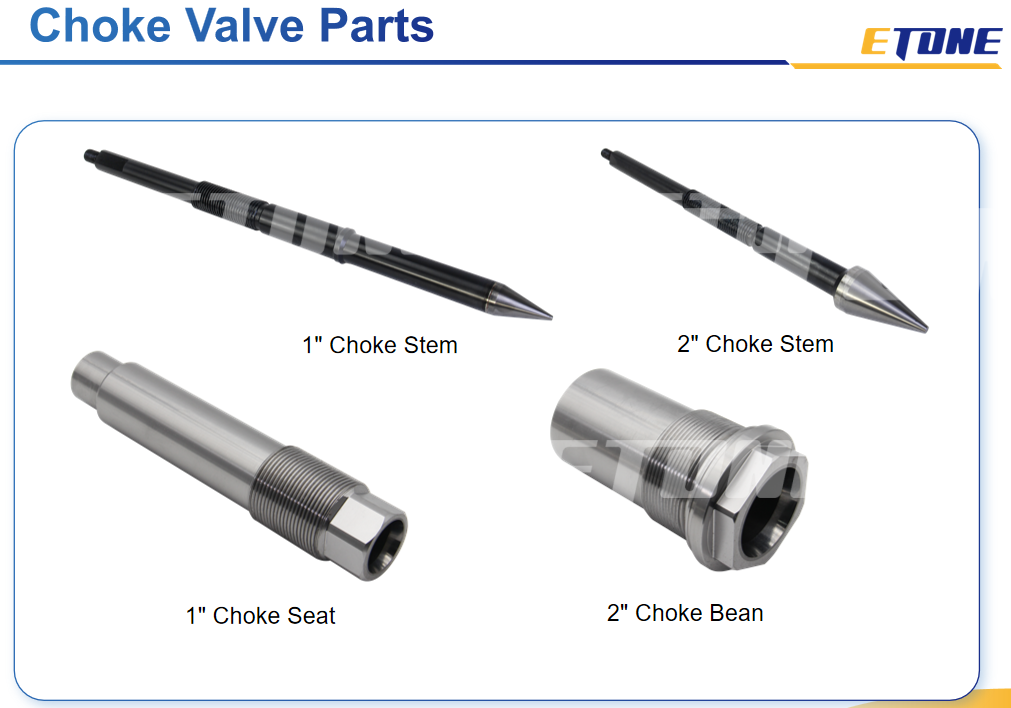
Choke Valve Parts: Precision choke stem needles, seat inserts, and solid tungsten carbide choke beans designed for accurate flow regulation and wear resistance.
Relief Valve Repair Kit: Calibrated spring assemblies, ground stainless steel discs, and high-temp seats engineered for rapid, reliable over-pressure protection.
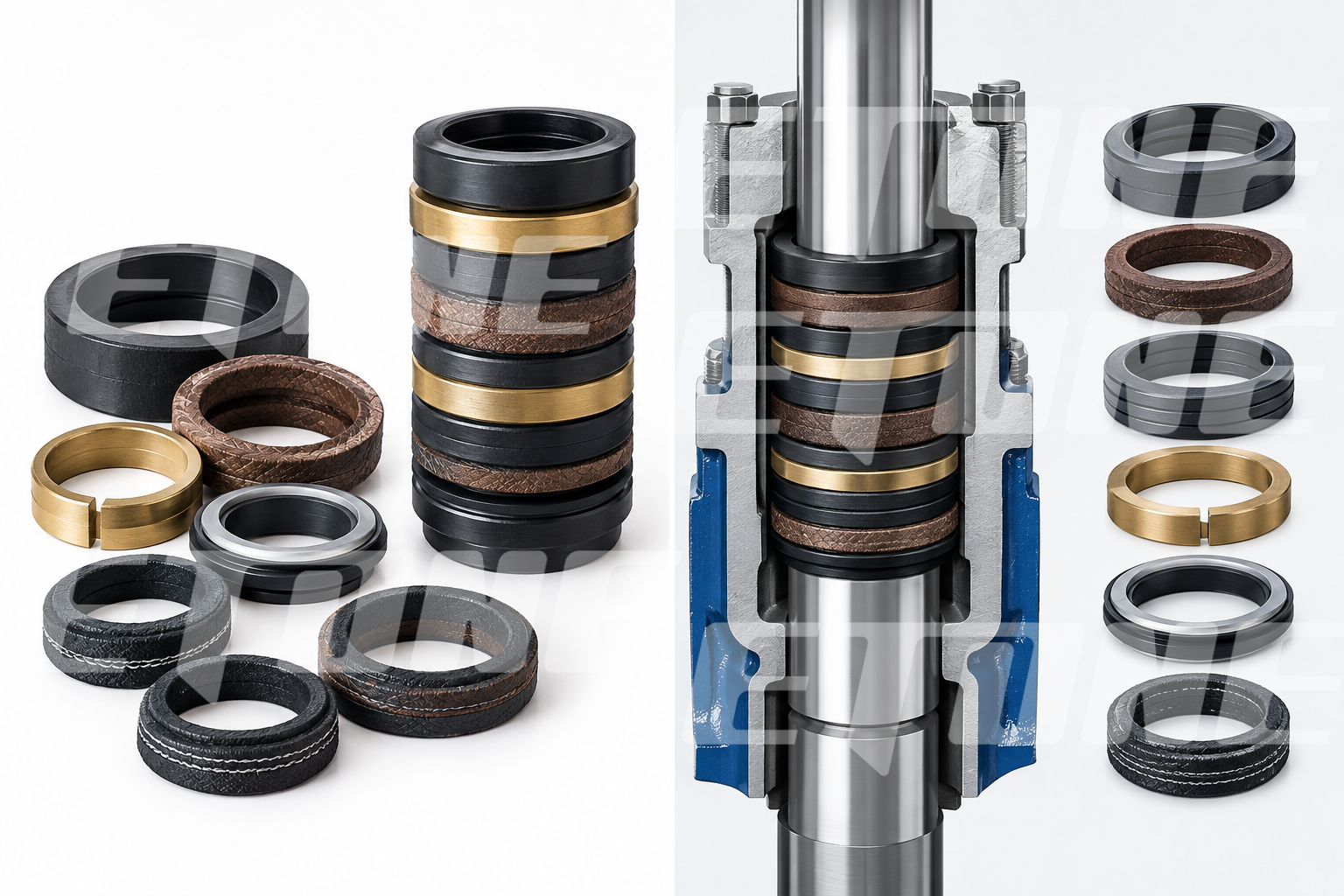
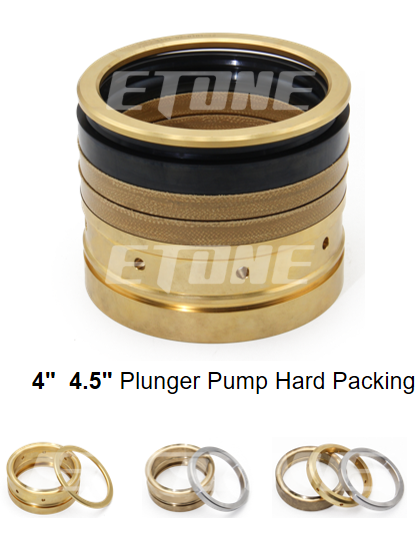
Plunger Pump Packing: Precision V-ring packing sets, Kevlar-reinforced support rings, and CNC-machined brass adapters for high-pressure fracturing and mud pumps.
8. Partner with Etone Oil for Quality-Assured Oilfield Components
In the oil and gas industry, component quality directly impacts operational safety, equipment longevity, and bottom-line profitability. By enforcing strict quality control protocols across every stage of manufacturing, Etone Oil (www.etoneoil.com) delivers replacement parts built for severe field conditions.
Protect your flow lines and reduce maintenance downtime with certified, precision CNC spare parts.
Visit www.etoneoil.com today to view our full product catalog, download complete quality management documentation, or contact our engineering sales team at pe@etoneoil.com to discuss your custom manufacturing requirements.