17-4 PH stainless steel is widely selected for demanding industrial components that require a combination of high strength, corrosion resistance, dimensional stability, and reliable mechanical performance. It is widely applied in oilfield hardware to produce precision valve elements, pump assemblies, shafts, bushings, connectors, and other mission-critical precision oilfield components.
To manufacturers focused on custom oilfield component fabrication, material grade selection represents merely an initial consideration. Heat treatment routines, CNC machining operations, tolerance control, surface treatment and final quality inspection collectively determine the long-term operational reliability of finished stainless steel parts.
What Is 17-4 PH Stainless Steel?
17-4 PH is a precipitation-hardening stainless steel, designated as UNS S17400, AISI 630 and EN 1.4542. Its “17-4” naming derives from its nominal chromium and copper content. Thanks to its precipitation-hardening characteristic, this alloy can reach far greater strength levels than most standard stainless steel grades.
Its typical chemical composition consists of roughly 15.5–17.5% chromium, 3–5% nickel, and 3–5% copper, plus niobium or tantalum as alloying additives. It is generally delivered in the solution-treated Condition A state, after which aging treatment is performed to attain target mechanical performance.
The alloy’s distinctive suite of properties qualifies 17-4 PH for oilfield components tasked with sustaining mechanical loads and preserving corrosion resistance within aggressive operating environments.
Consequently, customers procuring custom precision oilfield components will find 17-4 PH delivers a favorable trade-off between mechanical strength, corrosion resistance, machinability, and sustained part reliability over service life.
Key Benefits of 17-4 PH for Oilfield Components
For mechanical designers and rig operators sourcing high-performance stainless steel components, 17-4 PH offers a host of key advantages:
High Strength-to-Weight Ratio
In the H900 aged temper, the material delivers yield strength above 1,170 MPa (170 ksi). This characteristic enables engineers to develop thinner-walled downhole tool housings and valve stems without the risk of structural deformation under high hydrostatic pressure.
Low Distortion During Heat Treatment
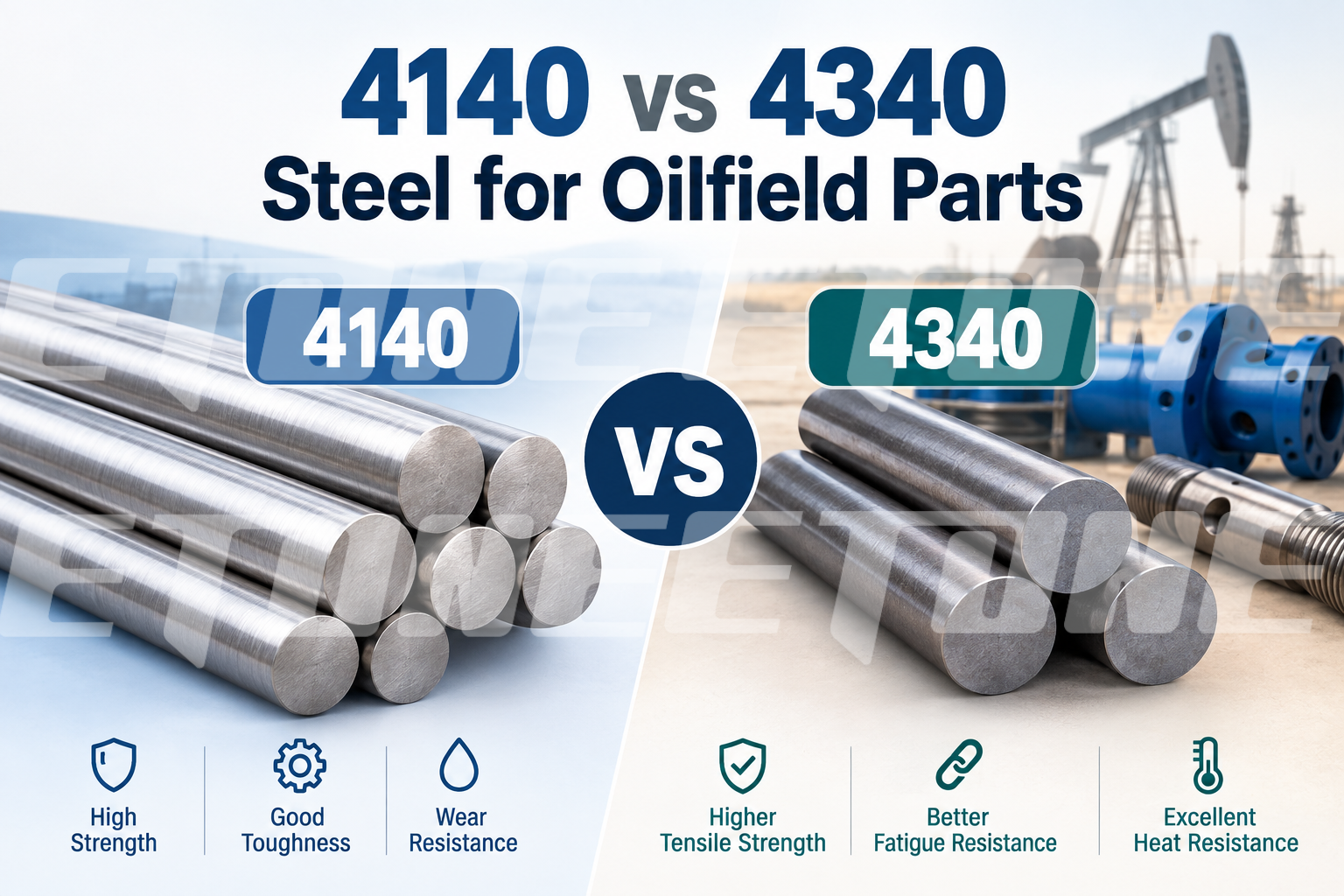
Precipitation hardening takes place within a low temperature range of 480°C–620°C. Compared with quenched-and-tempered carbon alloy steels like 4140 and 4340, this process greatly reduces thermal distortion and surface scaling. Critical precision oilfield parts can be fully machined in Condition A prior to heat treatment, with dimensional changes remaining highly predictable.
Resistance to Pitting and Environmental Cracking
In CO₂-dominant sweet well service, 17-4 PH delivers reliable resistance to localized pitting and erosion-corrosion caused by abrasive sand slurries flowing during hydraulic fracturing operations.Compliance with NACE MR0175 / ISO 15156 Standards
When subjected to carefully specified double-aged over-aged heat treatment conditions such as H1150D or H1150-M, 17-4 PH conforms to NACE standards for sour gas service. Its peak hardness is held within the 22–33 HRC range to guard against sulfide stress cracking (SSC).
Key Oilfield Applications for 17-4 PH Stainless Steel Parts
From surface choke manifolds all the way to downhole completion hardware, precision CNC-machined 17-4 PH stainless steel components function within mission-critical load-bearing assemblies.
A. Surface & Wellhead Pressure Control Equipment
Valve Stems and Gate Needles
Gate valve stems fitted within wellhead trees bear substantial torque and axial loads when sealing well pressure. Fabricated from 17-4 PH, these parts resist galling and thread distortion while maintaining effective sealing against wellbore fluids.
Choke Manifold Trim & Seats
Production fluids flowing at high velocity trigger cavitation wear. 17-4 PH parts, commonly aged to H900 or overlaid with thermal spray coatings, deliver excellent resistance to erosive damage.
Tubing Hangers & Wellhead Connectors
17-4 PH delivers sufficient load-carrying capability to sustain the weight of heavy production casing hung within wellhead bowls.
B. Downhole Drilling, Completion, and MWD/LWD Assemblies
MWD / LWD Pressure Housings
High-strength outer sleeves (some non-magnetic variants) shield delicate downhole logging electronics. 17-4 PH enables these housings to survive external pressures as high as 20,000 PSI.
Hydraulic Fracturing Plugs & Packers
Seating cones, expansion mandrels, and slip bodies manufactured from 17-4 PH maintain consistent setting force under extreme downhole thermal conditions.
Downhole Jar Shafts & Release Mechanism Subs
Heavy-duty impact tools leverage the excellent fracture toughness of over-aged 17-4 PH grades (H1025 or H1150) to repeatedly absorb cyclic kinetic shock loads.
CNC Machining Tips for 17-4 PH Stainless Steel Components
Producing intricate precision petroleum components out of 17-4 PH demands appropriate cutting tools, optimized speed and feed parameters, and effective heat control to mitigate work hardening and premature tool degradation.
1. Material Condition: Machining in Condition A versus Aged Tempers
Condition A (Solution Treated) features a hardness of approximately 33 HRC. Machining at this temper generates moderate cutting loads and supports high stock removal rates for heavy roughing operations. After machining, parts may undergo heat treatment to reach final target hardness like H900 or H1025, accompanied by minimal dimensional shrinkage of roughly 0.0004 to 0.0006 in/in.
Direct Machining in Aged Condition (H1150 / H1025): Where tight tolerances rule out post-machining heat treatment, 17-4 PH can be fully machined in its over-aged H1150 state. Cutting speeds must be lowered by 20%–30%, yet chip formation stays stable and controllable.
2. Cutting Tool Geometry and Carbide Coating Selection
Insert Coatings: Opt for PVD-coated carbide inserts including TiAlN or AlCrN instead of thick CVD coatings. PVD coatings preserve sharp cutting edges while offering reliable thermal shielding.
Rake Angle: Choose insert geometries with positive rake and dedicated chip breakers. Sharp cutting edges shear the work-hardening martensitic microstructure instead of compressing or rubbing the workpiece surface.
3. Turning, Drilling and Threading Recommendations
Avoid Work Hardening: Prevent tool dwelling and friction rubbing on component surfaces. Keep a minimum feed rate of 0.10 mm/rev during roughing cuts.
API Thread Machining: Deploy multi-point indexable threading inserts paired with continuous high-pressure coolant supply. This flushes fine chips from deep API thread roots effectively.
Sourcing Precision 17-4 PH Components from Etone Oil
At Etone Oil, we specialize in high-precision CNC machining and custom heat treatment for precision oilfield parts and heavy-duty stainless steel parts.
Our Manufacturing & Quality Assurance Standards:
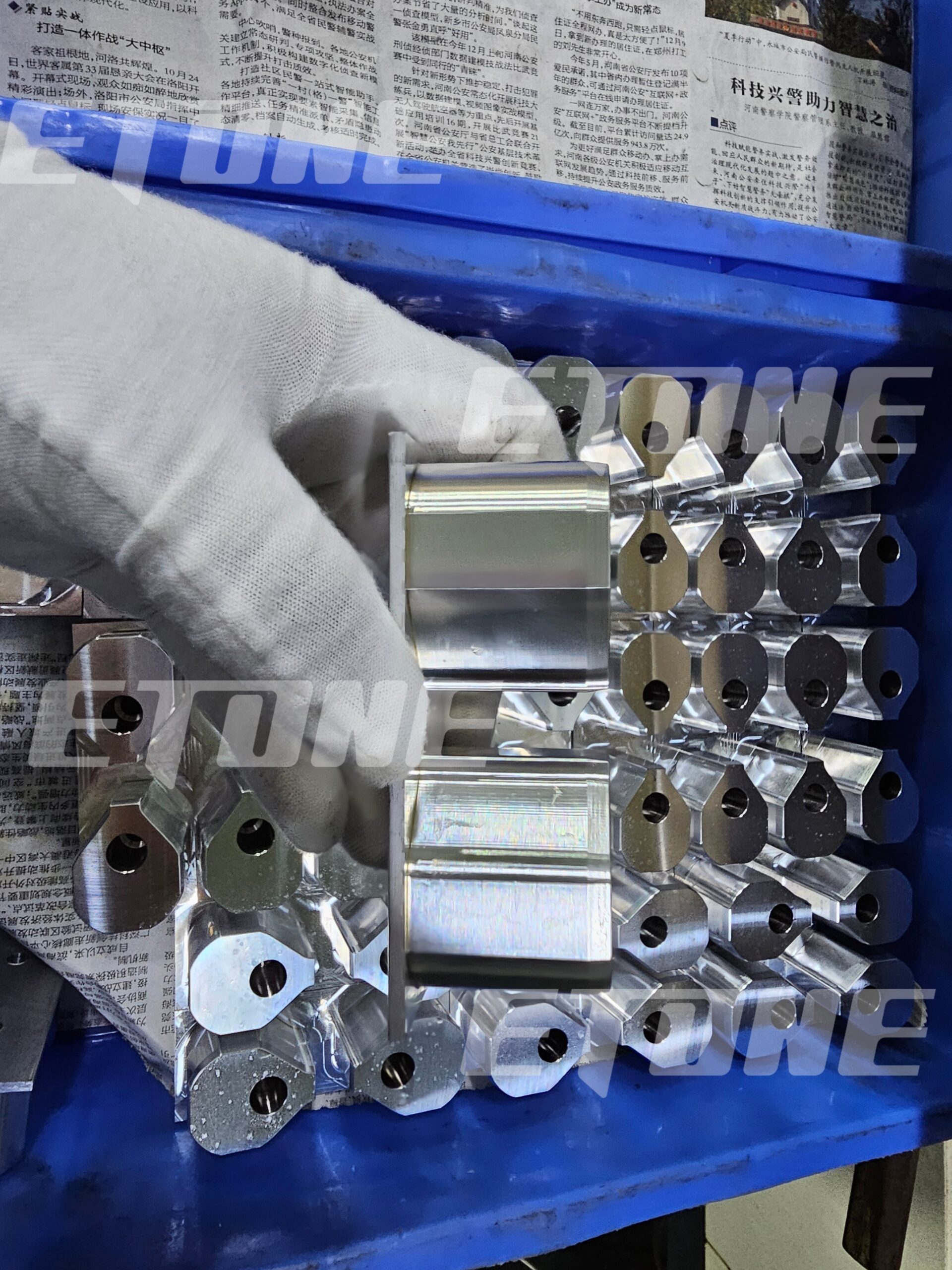
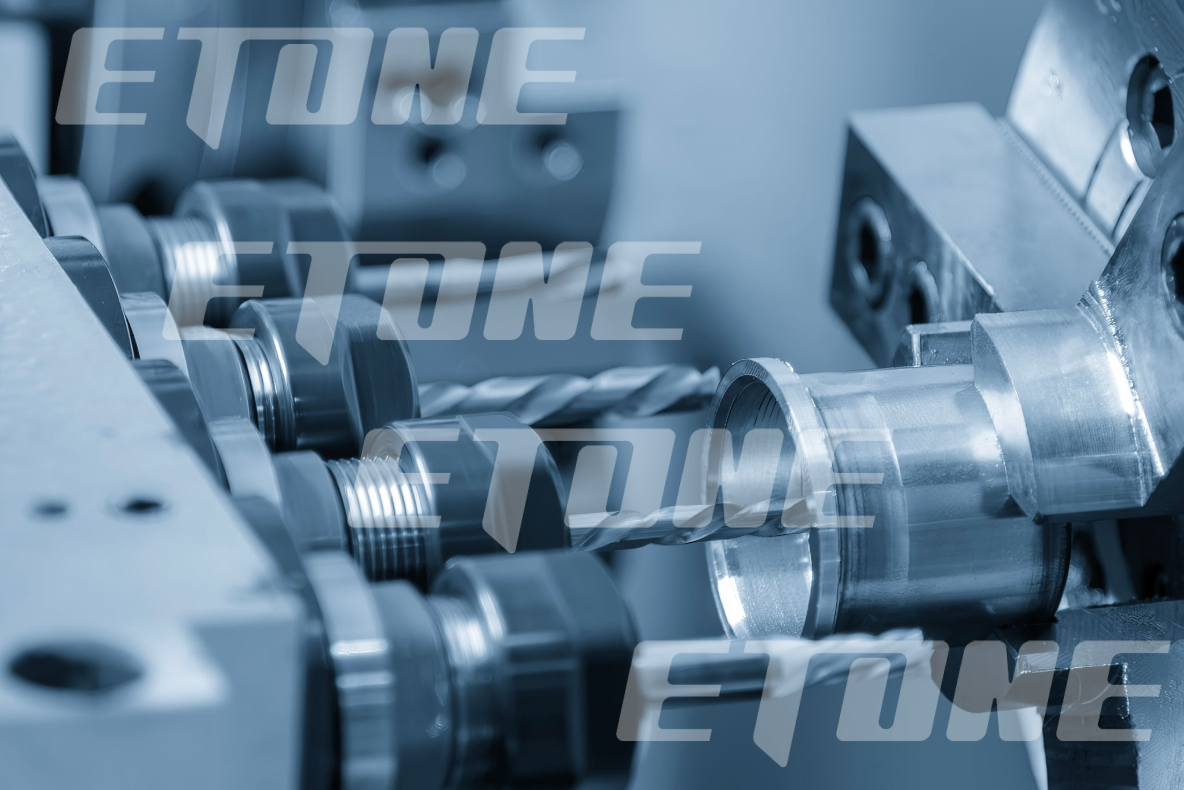
Multi-Axis CNC Machining Centers: Equipped with high-torque turning lathes and live-tooling centers for complex oilfield geometries.
Strict Material Traceability: Complete 3.1 Mill Test Reports (MTC) verifying chemical composition, heat numbers, and ultrasonic soundness.
NACE & API Compliance: Controlled heat treatment lines delivering verified H1150D, H1025, and H900 conditions compliant with NACE MR0175 and API Spec 6A/7-1.
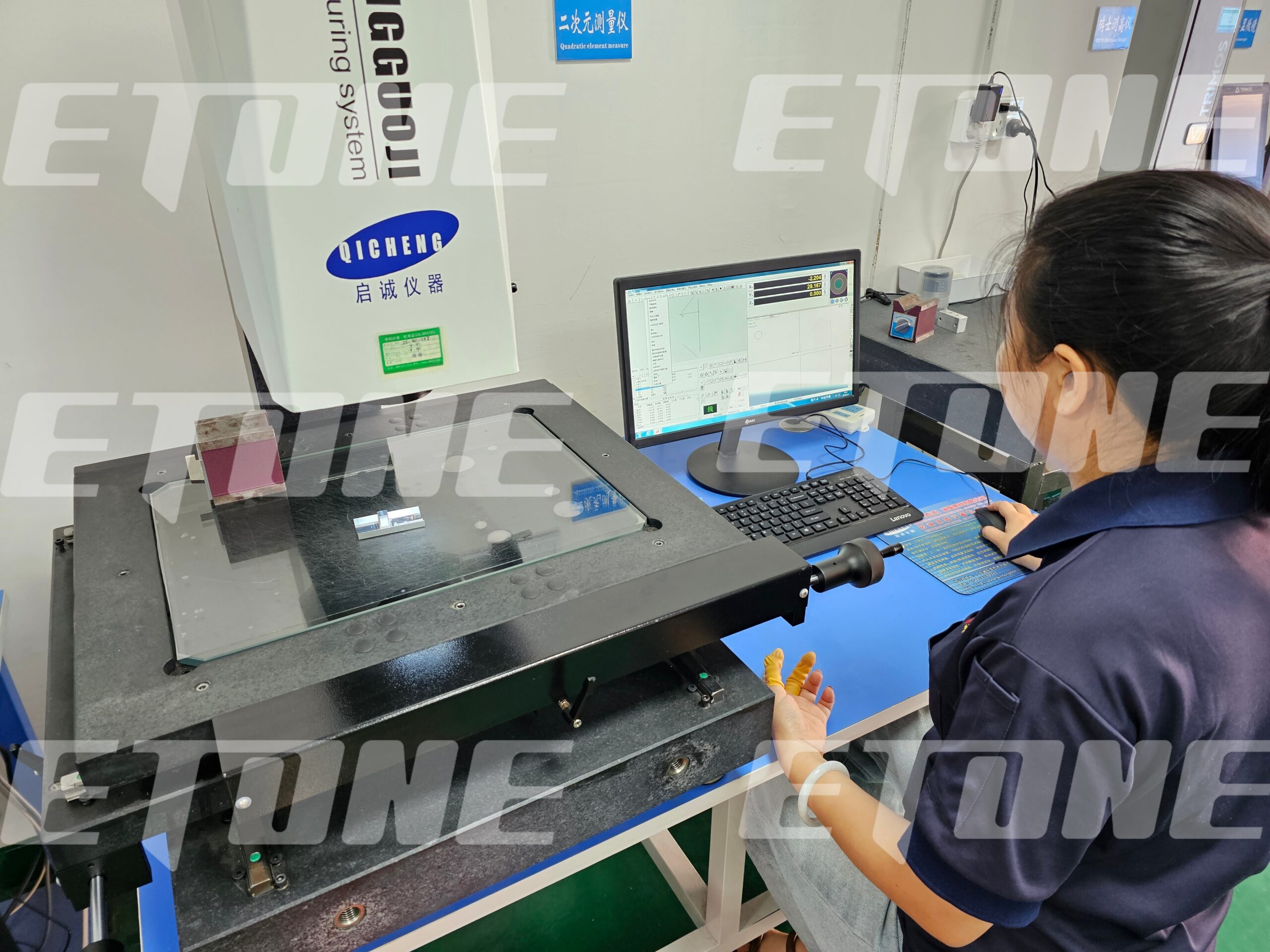
In-House Quality Metrology: CMM dimensional inspection, thread stand-off verification, liquid penetrant testing (DPI), and magnetic particle inspection (MPI).
Request a Quote for Precision Oilfield Components
From high-pressure valve stems and downhole sensor housings to custom 17-4 PH API flanges, Etone Oil supplies precision oilfield components with proven field performance.
Reach out to the Etone Oil engineering team now. +86 135 3728 5097 or pe@etoneoil.com. Share your CAD technical drawings, ask for a prompt quotation, or schedule a manufacturing consultation.