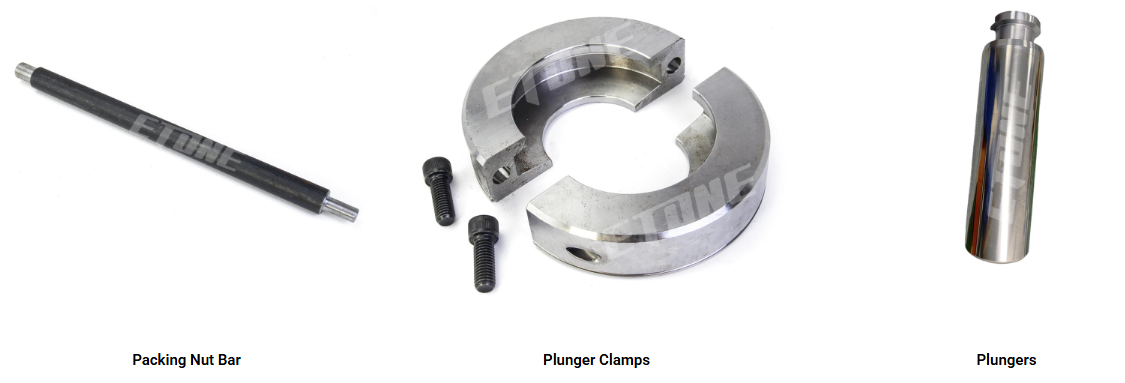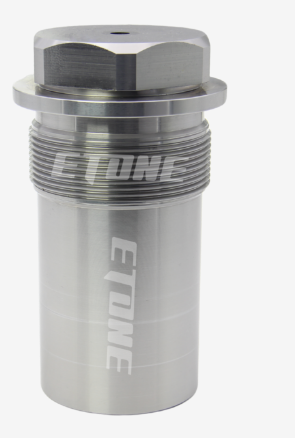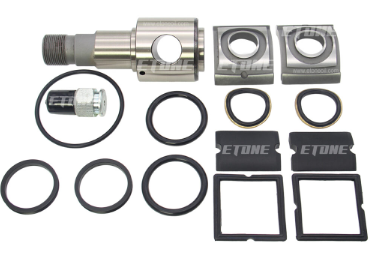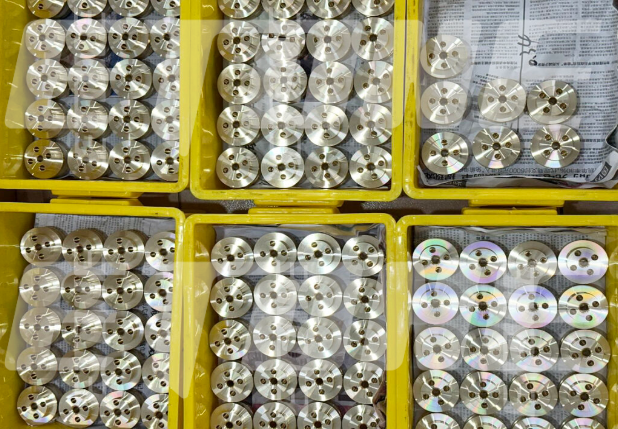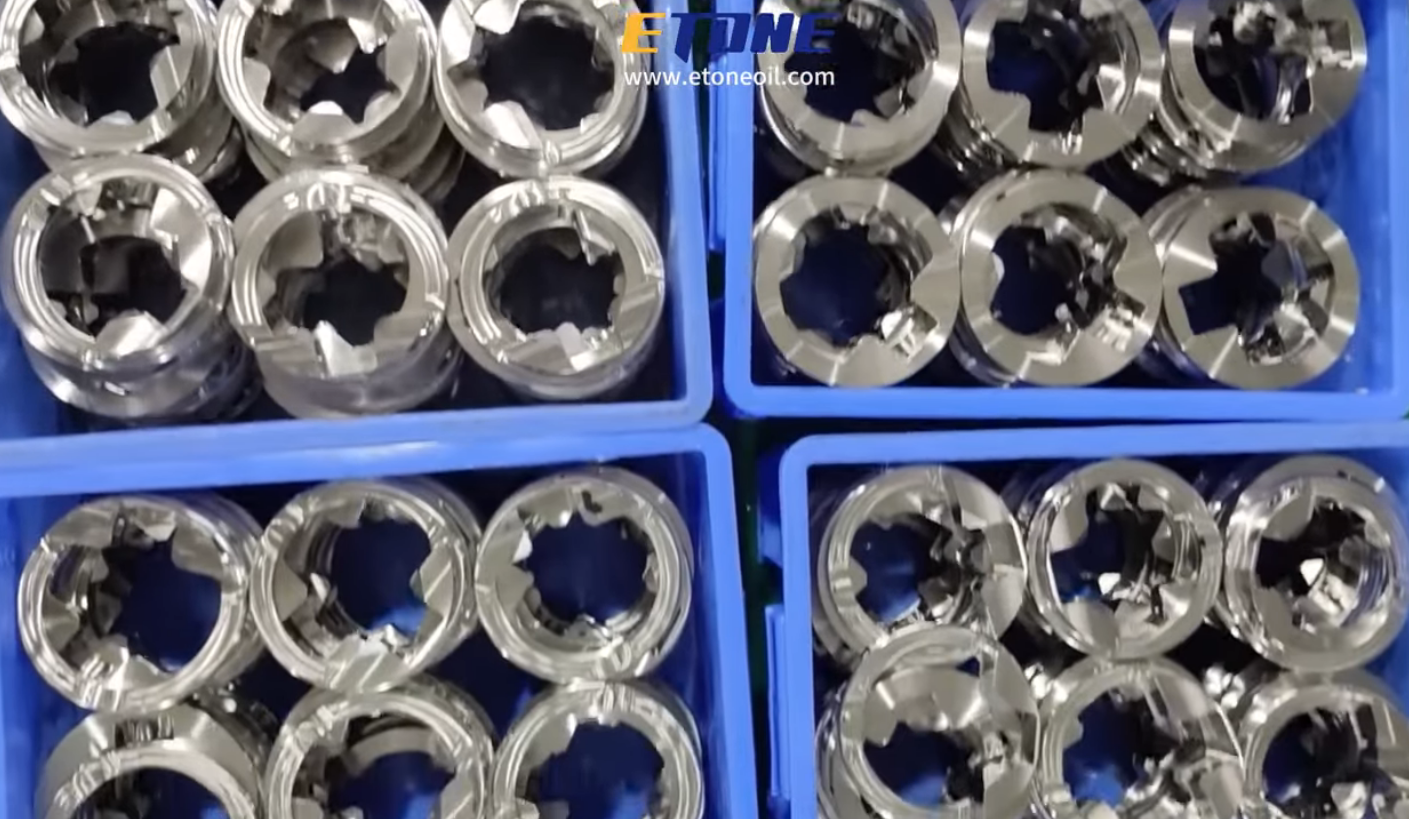
A relief valve is a component found in oilfield fluid systems. When system pressure exceeds the preset threshold, the relief valve opens to vent excess pressure, safeguarding equipment against hazardous overpressure events. Continuous service exposes the valve to wear, corrosion, debris buildup, and cyclic pressure loading, which gradually degrade its operational performance.
A properly matched relief valve repair kit includes replacement components designed to reinstate the valve’s sealing integrity and mechanical functionality. Familiarity with the working principles of the stem, seat, ball, spring and seals empowers maintenance crews to pinpoint faulty components, select suitable spares and cut unplanned downtime.
For oilfield operators, service contractors and distributors, sourcing relief valve spare parts goes far beyond swapping out worn components. Critical considerations include material compatibility, dimensional accuracy, pressure ratings and adherence to the OEM’s official guidelines.
1. What Is a Relief Valve Repair Kit?
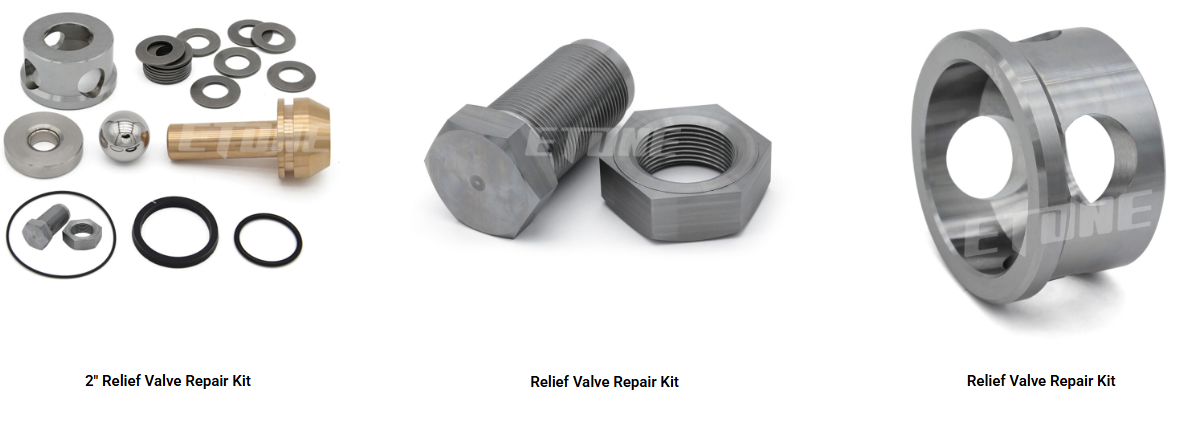
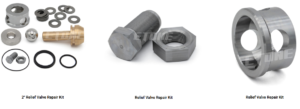
A relief valve repair kit is a collection of replacement components that keep a relief valve functioning or restore it to condition. Depending on the relief valve design and the service required, a relief valve repair kit may include a valve stem, seat, ball, spring, O‑rings, seals, and other internal parts.
The specific parts in a relief valve repair kit vary with the valve model, the manufacturer, and the job. Some kits replace the sealing parts, while more complete relief valve rebuild kits also contain mechanical parts that may have worn or weakened.
In oilfield operations, relief valves are located in pressure control sets, pumps, fluid handling systems, and other areas where pressure protection is required. The working environment can be harsh, especially when the equipment encounters particles, corrosive liquids, pressure fluctuations, or many cycles.
A well‑matched relief valve repair kit can help maintenance teams:
– Seal between the internal parts of a relief valve.
– Fix leakage caused by seats or damaged seals in a relief valve.
– Replace springs that no longer meet the required performance specifications of a relief valve.
– Reduce downtime caused by internal component failure in a relief valve.
– Support maintenance and equipment refurbishment for a relief valve.
However, changing parts does not automatically make a relief valve operate correctly. The entire assembly must be inspected, reassembled, and tested in accordance with the relief valve manufacturer’s procedures and service guidelines.
2. Valve Stem: Maintaining Alignment and Controlled Movement
The valve stem transmits force and guides the motion of internal valve parts. Depending on valve construction, the valve stem connects the closure member, bears spring load, and keeps moving components aligned. Housed inside a fixed assembly, the valve stem’s dimensional accuracy and surface finish are critical to the valve’s smooth actuation.
Common stem defects cover surface wear from cyclic movement, leading to misalignment and increased friction; corrosion triggered by incompatible fluids or the surrounding environment, shortening service life; bending and deformation from abnormal loads, rough handling or assembly errors, which cause sluggish operation; thread impairment that compromises positioning and locking; scoring and galling stemming from incompatible material pairs, inadequate lubrication or severe service conditions.
A visual check alone is not enough to detect stems. Key dimensions, straightness, surface finish, thread integrity and mating fit must be verified against specifications.
3. Valve Seat: Supporting Sealing
The valve seat forms the sealing contact surface for the closing element and is a critical relief valve component. Damage to its sealing interface easily causes leakage or unstable valve performance. When assembled, the valve seat must correctly mate precisely with its paired part; tiny flaws can lead to failures under high-pressure service.
Seat degradation comes from typical factors: abrasive solids in process fluid, repeated impact and contact with the closure member, chemical corrosion, improper assembly, flow‑induced erosion, and mismatched replacement dimensions or materials.
Visible damage includes pitting, scratches, irregular contact traces, deformation and erosion, along the sealing zone. A worn seat fails to meet sealing requirements. Sometimes only the valve seat needs replacing; on occasions the ball or matching part must also be swapped out as both contact surfaces may have degraded.
Seat material choice depends on type, pressure, temperature, wear risk and how well it matches mating parts. Engineers may select seats or special non‑metallic sealing materials for different design situations. When a seat is custom CNC‑machined, strict control over dimensions is required: inner and outer diameters, length, shoulder sizes, concentricity, the finish of the sealing surface groove shape (if needed), material grade and hardness. All seat specifications must follow engineering drawings or verified samples, not guesses. For crews that work in oilfields, a qualified replacement seat restores the contact geometry and reduces the chance of repeated leaks. Still, proper installation and testing are vital for operation.
Custom stem material is chosen based on working pressure, temperature, fluid compatibility, corrosion risk, and mechanical load. Steel and alloy steel are common options depending on actual service conditions. Replacement stems are typically precision CNC machined to control diameters, shoulders, threads and grooves with inspection to catch dimensional errors. When purchasing relief valve stems, buyers must supply valve model, drawings or sample measurements, material grades, required hardness and surface treatment.
4. Valve Ball: A Small Part with a Big Job
Some relief valves use a ball inside the closing and sealing part. The ball fits with the valve seat to control the flow of fluid. How the valve works can vary from one model to another. Because the ball surface is the seal, the roundness of the ball, how smooth the surface is, and the material used all decide how well the valve works.
The ball often fails in several ways. It can develop pits. Corrode when it meets harsh fluid or harsh surroundings. Hard particles or rough handling can scratch it. Overloading or weak material can flatten the ball. If a replacement ball is not the size, it will not fit the assembly. Even if the ball and seat look fine, the valve can still leak if dirt gets trapped between them. To fix a leak, a technician must look at both the ball and the seat. Replacing one part when the other part is damaged will not solve the leak.
Replacement balls are usually made of steel, hardened alloy steel, or other special materials. The choice depends on the design and the conditions in the field. For oilfield valves that are custom-made, the diameter, roundness, surface finish, hardness, corrosion resistance, and traceability of the material must be controlled closely. Precision machining and careful inspection keep the shape right. Buyers should not pick a ball just because it has the right nominal size, especially for OEM parts that need special material or finish. When the ball matches the seat, and the seat is not damaged, the valve seals well. The chance of repeated leaks goes down.
5. Relief Valve Spring: Providing the Needed Mechanical Force
The spring is a part in most spring‑loaded relief valves. It gives the force that keeps the valve shut until the system pressure reaches the set opening point. When the pressure pushes harder than the spring can resist, the valve opens as it should. How the spring works with nearby parts decides how the valve reacts to pressure changes, which shapes the valve’s pressure‑control ability.
Signs that a spring is worn out include corrosion, pits on the surface, cracks, permanent bending, a change in length, fatigue from repeated loading, and behaviour that is not in spec. Not every pressure problem comes from a bad spring. A misadjustment of a seat, dirt, a wrong installation, or other internal faults can cause the same symptoms. A skilled technician must examine the valve before replacing any part.
Specifying a spring is more than picking an outer diameter. Important details are the wire diameter, the number of coils, the length when installed, the spring rate, the material, and the working limits. The environment – moisture, corrosive fluids, high temperature and repeated loading – tells us what material and how the spring should be made. Steel and spring‑alloy grades are used for many different situations, matched to the valve and the service conditions.
You cannot choose a replacement spring to fit the space. The spring must give the same force as the original. A spring that is too great or too weak changes the opening point and can create serious pressure‑control problems. Oilfield buyers should provide the spring data or get engineering approval before ordering a spare.
6. Relief Valve O‑rings: Keeping Leaks Out
Seals and O‑rings stop fluid from leaking across joints and mating surfaces inside relief valves. The way they are arranged and what they do can vary with each valve design. They are vital for good sealing. Unlike metal parts, elastomeric seals get weaker when they age, stay compressed for a time, experience hot and cold temperature changes, come into contact with chemicals they do not like, or suffer mechanical damage.
Common ways that seals fail are:
– Hardening from heat and age, which makes them lose flexibility and stop sealing
– Swelling when they contact fluids that do not match, which changes their size and fit.
– Cracking on the surface because of attack.
– Pushing into clearances when the pressure’s too high, or the groove shape is wrong.
– Cuts or twists that happen if they are installed incorrectly.
– Permanent compression set, where the seal cannot return to its shape after long compression.
When a repair kit is used for an oilfield valve, the choice of replacement seal depends on the type, the operating temperature, the pressure rating, the size of the groove, and the original design limits. Nitrile rubber, HNBR, FKM, and other elastomers are suitable for these conditions. The material must be checked against the real service demands, not by its label.
Proper installation matters as much. If you clean the sealing surfaces carefully, follow assembly steps, and stick to OEM guidelines, you can reduce the risk of early seal failure.
7. How to Select the Right Relief Valve Repair Kit
To pick a good oilfield relief valve repair kit, start by verifying which valve you have. The conditions it will face. Write down the manufacturer, model, and part number. Even if two valves look the same, their internals may differ, so you cannot rely on looks
Then provide the operating details: pressure, temperature, and the type of fluid. Check that the kit’s materials match these conditions. Present drawings, part numbers or measurements to verify size and material. This ensures effective quality control and traceability for custom-fabricated parts.
You may opt for individual spare parts when just one component fails, or select a complete rebuild kit if multiple internal parts show wear. Your choice should take into account component condition, expected valve downtime, stock availability, and official OEM maintenance recommendations.
Before placing your order, furnish all relevant technical details: valve model, original part numbers, drawings or reference photos, order quantity, material and surface finish requirements, operating conditions and inspection specifications. This enables suppliers to validate proper fitment and provide an accurate quotation.
8. Custom Relief Valve Repair Kits from Etone Oil
Etone Oil works with oilfield parts and precision metal parts. They supply plug valve repair kits, flapper check valve kits, choke valve parts, relief valve repair kits, plunger pump packing, and other custom oilfield pieces.
If you need a relief valve replacement, start by confirming the valve’s configuration and technical specs. You can ask for parts like stems, seats, balls, springs and seals or for a complete repair kit.
To receive a quote, supply drawings, part numbers, sample photos, material standards and service conditions. These facts set the scope of the supply. Let you review the specs before production. Talking with the team about custom spares reduces risks, including size, material, seal performance, and how well it works with your equipment.
Tel: +86 135 3728 5097
Etone Oil offers a range of valve and pump spare parts to help with consolidated sourcing. Whether you need maintenance kits or a single custom‑made component, clear technical data is the key to smooth communication.